Investor view · Unit One

Equity buys the moat. Asset finance buys the silicon.

JSE is capitalizing one complete proof asset designed to convert architecture into measured evidence, then use that evidence to open a customer-owned fleet model with recurring Assurance, Lifecycle and optional Intelligence.

Informational only. Not an offer or solicitation to buy or sell any security. Final financing structure remains subject to counsel, commitments and definitive documentation.


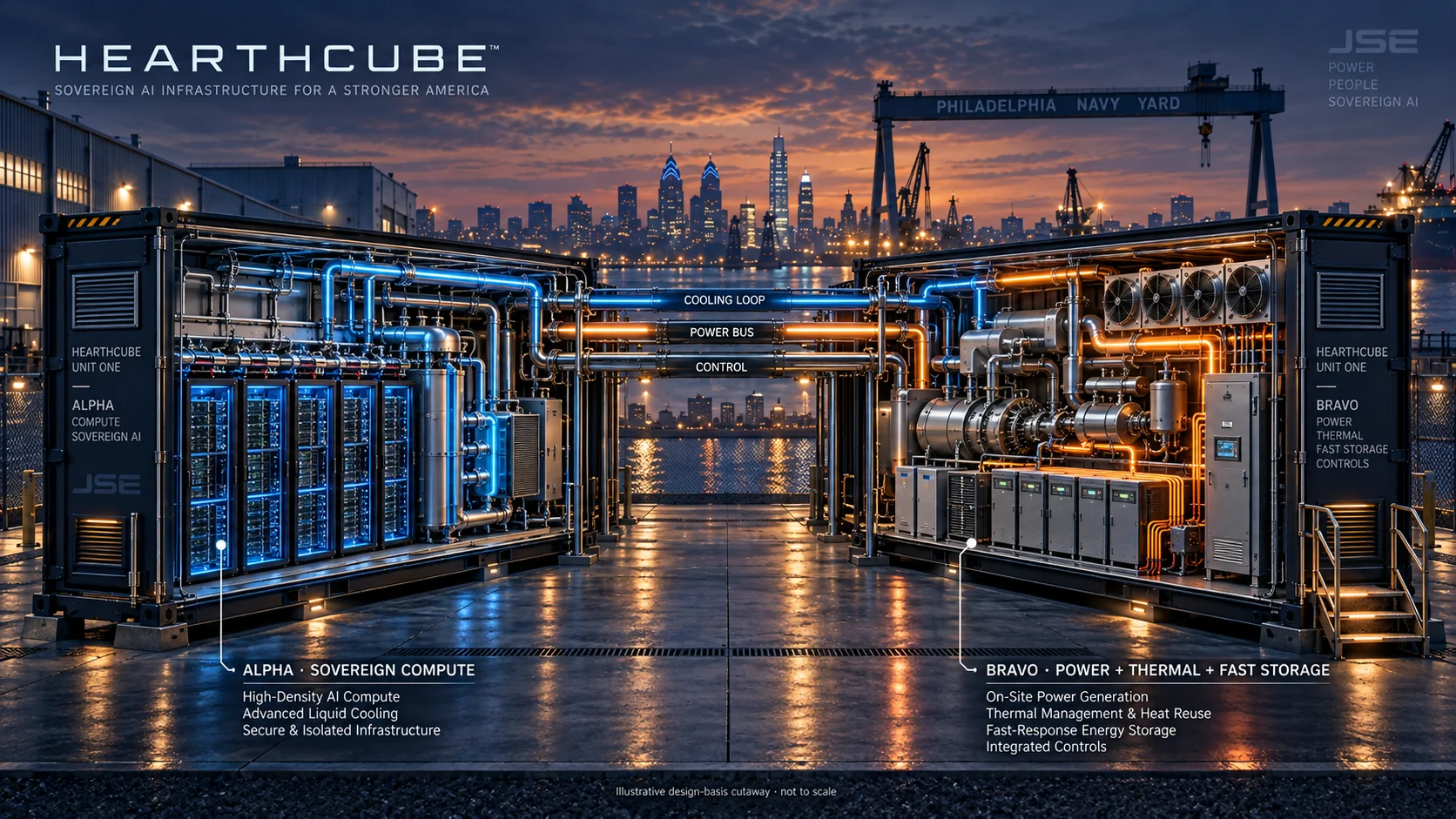
Conceptual HEARTHCube Unit One installationJack Stallion Enterprise
Current pre-RFQ capitalization

One machine. One complete proof.

The current capitalization architecture distinguishes the machine's gross build cost, working-capital reserve and preferred mix of equity versus non-equity equipment/vendor finance.

~$3.144M
Base gross Unit One CAPEX
Pre-RFQ underwriting
~$200K
Working-capital reserve
Current allowance
~$3.4M
Rounded total capitalization
Target architecture
$2.5M + ~$0.9M
Equity + non-equity finance
Preferred capitalization

The approximately $0.9M non-equity component must be committed to be treated as finance. If it is not, JSE either increases equity or deliberately uses the validation-fill fallback. The total capitalization requirement is not automatically the securities offering amount.

What Unit One buys

The first machine's product is evidence.

Physics

Measured plant behavior.

Thermals, C60 part-load behavior, AI transients, BESS sizing and dry-rejection evidence.

Operations

Commissioning + service.

Control traces, fault response, fabrication learning, deployment procedure, maintenance evidence and fluid/TIM qualification.

Economics

Real repeat-build inputs.

Actual BOM data, NRE separation and the evidence needed before publishing mature fleet COGS, ASP, margin or payback.

“Unit One is a proof asset, not a representative fleet asset.”
Fleet business model

Customer-owned by default. Recurring by earned value.

JSE resolved the capital-intensity problem by separating who owns the asset from who earns the ongoing relationship.

Sold unit

Hardware + integration

Customer owns the HEARTHCube. JSE earns hardware/integration margin supported by progress-payment architecture once commercial terms are validated.

Recurring

Assurance + Lifecycle

Evidence/support and physical field service recur because the installed machine requires disciplined stewardship—not because safe operation is held hostage.

Optional

ARKADIN Intelligence

Optimization becomes a separate fee only where measurable value supports it. This is the layer closest to software economics.

Illustrative HEARTHCube cutaway
Illustrative design-basis system view · not a signed fabrication drawing
The investment thesis

Time-to-power, not utility-bill theater.

HEARTHCube is not underwritten as a clever way to shave a modest electricity bill. It exists for projects where waiting for utility interconnection delays or destroys the value of the compute asset.

  • Power is brought with the machine.
  • Sovereignty is enforced as a data/control boundary.
  • Thermal value is additional, site-dependent and contract-dependent.
  • Unit One converts design basis into an evidence moat.
What we do not publish yet

Credibility compounds when the unanswered question stays unanswered.

No mature fleet economics without RFQs.

Repeat-build COGS, fleet ASP, gross margin, mature payback and market-dollar totals remain gated by vendor quotes and customer commercial terms.

No heat revenue without a sink.

Thermal value is not booked because a pipe exists. It requires a usable sink, metering, counterparties and a contract.

Retired economics from earlier concept documents are not part of the current investment case.

Investor access

Read the full case. Then challenge it.

JSE maintains investor, architecture and diligence materials with claim status, source discipline and current commercial locks carried through the stack.

Request the materials

Jack Stallion · Founder & Engineer
[email protected] · 215.756.5552